Monday, 9 September 2013

THE SQUACCO HERON IN EXTREMADURA


The Squacco Heron (Ardeola ralloides) was one of the species covered by the national heron census 2011, promoted by SEO/BirdLife (Garrido et al., 2012). The population in Extremadura totalled only 11 pairs, representing a tiny 0.5% of the total Spanish population (2,075 pairs). The most important regions were Catalonia (50%, especially the Ebro Delta), Valencia (32% at the Albufera de Valencia) and Anaadluycia (15%, Coto Doñana). The population trend in Spain is positive, with a strong increase since 1960, slowing down in the period 1990 – 2002. In Extremadura, the Squacco Heron occurred in six colonies in five localities. Most of the population was of isolated pairs within mixed colonies dominated by Cattle Egrets, the main site being the Arrocampo reservoir with four pairs. The substrate most used was marshy vegetation, although in several colonies the nests were built in trees or shrubs.

Breeding Squacco Herons is a new development in Extremadura, only established since 2000 in two localities simultaneously: the reservoirs of Arrocampo and Montijo. Breeding at Arrocampo has been regular since 2000, with annual records of between one and five pairs, with two or three being the most frequent (in 2012 there were two and in 2013 only one pair). At the Montijo reservoir, it is similar with regular nesting since 2000, although with fewer birds: one breeding pair from 2000 to 2006 and 1-3 pairs from 2007 to 2013. Information about other localities is very scarce. In the less often-watched Alqueva reservoir three nests were found in two zones in 2011, with irregular breeding in earlier and later years, owing to the fluctuating water levels (there was no breeding in 2013). At the Azud de Badajoz, there have been sightings since 1990, but with no breeding suspected for a decade afterwards. In 2011, one nest was confirmed, although others may have been present, and it was the same in 2012 and 2013. Finally, at the Orellana reservoir, information is only available from 2011 (one nest), but one has to take into account that this heronry, situated on islands, does not assemble each year, because of variations of water level and is also very difficult to survey.

To understand the regional trend, one needs to take into account that there are no previous censuses. In 2000, there had been at least five pairs in the two known colonies and in 2011, this rose to eleven pairs in six sites. The geographical expansion is evident, as in the slight population increase, but presently three of the colonies are only of irregular occupation and the figures there fluctuate greatly, possibly in relation to the situation of colonies in Andalucía.


Although traditionally Squacco Herons are considered as summer visitors in Europe, in Extremadura they are possible to find throughout the year, indeed the wintering population (of 15-25 birds) is similar or even larger than the breeding population. In winter the species is more dispersed, is not present at roosts and has rather secretive habits, so it is likely that the actual figures are even greater. In the map the presence of the species in January 2011 is shown in violet. Four of these sites are regular wintering areas, two in breeding sites (Arrocampo, Guadiana in Badajoz) and two in rice-growing areas (Vegas Altas and Alagón). The largest group in winter was nine birds on the Guadiana River in Badajoz in December 2011.

At other seasons, the species can be found in wetlands throughout almost the whole region, with the largest numbers at the end of summer and start of autumn, when individuals are dispersing from other areas, probably mainly from Doñana. However, there are no records of ringed birds to substantiate this. The largest group ever recorded was 19 (Guadiana river in Badajoz, September 2012).

Sources:
- Garrido, J. R., Molina, B. y del Moral, J. C. (Eds.) 2012. Las garzas en España, población reproductora e invernante en 2010-2011 y método de censo. SEO/BirdLife. Madrid.  [download]
- Aves de Extremadura. Volúmenes 1, 2, 3 y 4. Años 1998-2008. [download]

Participants in the 2011 census: Coordinadores: Javier Prieta (Cáceres) and José María Traverso (Badajoz). Badajoz: Alfredo Mirat, Antonio García-Ortiz, Antonio Núñez Ossorio, Carmen Galán, Casimiro Corbacho, Emilio Costillo, Fernando Yuste, Jesús Morena, Jesús Solana, José Ángel Salas, José Antonio Fimia, José Elías Rodríguez Vázquez, José Gordillo, José María Traverso, Juan Antonio Barquero, Juan Carlos Paniagua, Luis Galán, María J. García-Baquero, Patricia Gordón, Toribio Álvarez and Xurxo Piñeiro. Cáceres: Agustín Morena, Carmelo Fernández Martínez, César Clemente, Emilio Costillo, Helios Dalmau, Javier Briz, Francisco Javier Caballero, Javier Mahíllo, Javier Prieta, Jerónimo Jaén, Jesús Montero, Juan Manuel Brías, Julián Panadero, Manuel García del Rey, María José Moreno, Martín Kelsey, Sergio Mayordomo and Vicente Risco

Monday, 2 September 2013

BOOTED EAGLES: VALIENTE AND LUNA


Booted Eagle (Aquila pennata). Valiente, male (photo: Domingo Rivera).

In 2011 the MIGRA project of SEO/BirdLife started, dedicated to the study of the migration of birds from Spain and using, amongst other methods, satellite transmitters to track the movements of many individual birds. One of the first species involved was Booted Eagle (Aquila pennata), with 15 tagged individuals up to 2013 from various parts of Spain, including four from Extremadura, as part of a project led by the Government of Extremadura. In 2011 six birds were tracked and in 2013 it was eleven, now only ten because of the first tagged birds, a male called Valiente, was found dead, hit by a vehicle, a few weeks ago. The peculiarities of the first journey taken by Luna and Valiente, the first Booted Eagles from Extremadura that were tagged in 2011, were described before in this blog ( autumn journey and winter and spring return) and so we will not repeat the details.

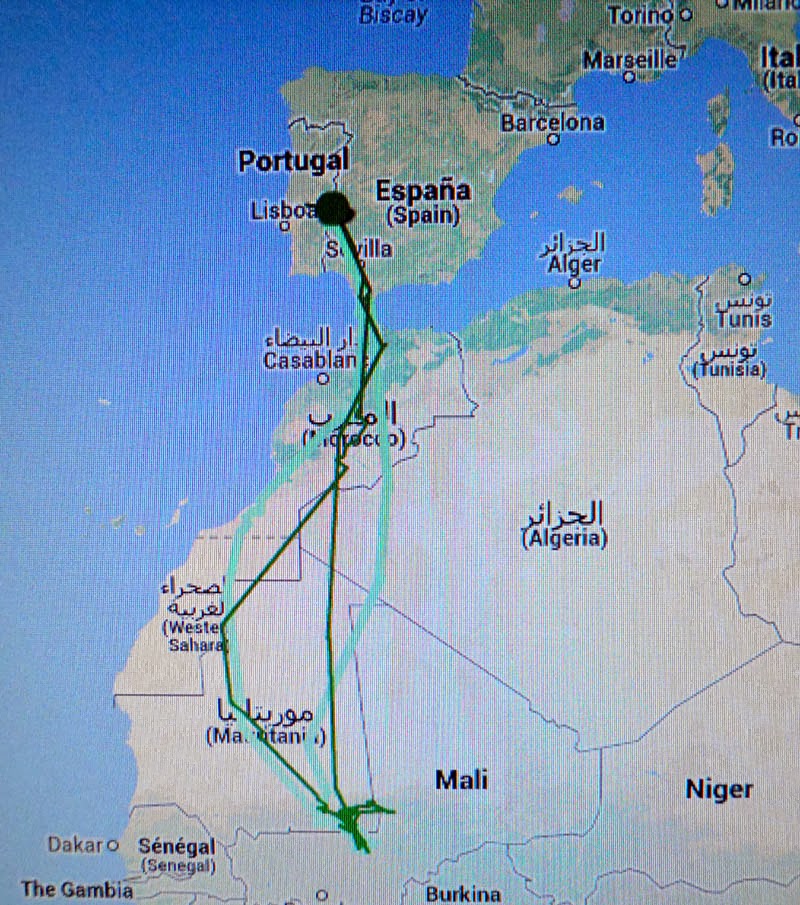
Valiente was an adult male dark morph Booted Eagle tagged at La Roca de la Sierra, Badajoz on 3rd August 2011 and whose transmitter continued to show his location until 4th August 2013, two years and a day later, when he was killed on a road between orchards in Valdelacalzada, Badajoz. A cyclist discovered the corpse and was surprised to find it was ringed and carried a yellow apparatus on its back, which he removed and returned. Domingo Rivera and Ángel Sánchez told us of his breeding history over the last three years. In 2011 Valiente successfully raised on his own a chick, as his mate had died on a wire when the chick was only a week old. In 2012, he took over a Raven’s nest in a eucalyptus tree, paired with a pale phase female and despite building a further two nests failed to breed. In 2013, he failed to pair and travelled in an erratic fashion over the area where he normally bred. With respect to his migrations, the map above shows the journeys in 2011/12 and 2012/13, very similar to each other. In both cases, he wintered in the same general area: once in Niger and the other time in Nigeria. The two-way journeys across the Sahara showed that the return journey was always to the west of the route taken in the outward journey. As can be seen in the graph below, the dates did not vary much, the 2012 journey was a bit earlier than 2011 and he spent more time in 2012 on his wintering grounds in Niger. The return journeys were almost identical in terms of dates and duration. Compared with other tagged Booted Eagles, Valiente had been unusual, being the only one with two wintering zones, one that had wintered further away (3,500 km) and the fastest in its return journeys. Of the four tagged birds from Extremadura, he was the only one that wintered in the eastern Sahel, the others staying much further to the west, between Mali and Mauritania.


Luna is an adult female dark morph, tagged in Alburquerque (Badajoz) on 3rd August 2011 and whose transmitter continues in operation. Domingo Rivera and Ángel Sánchez again describe her breeding history over the last three years. In 2011, she raised two chicks in a nest in a eucalyptus tree. In 2012, she occupied the same nest, but following its collapse because of weather conditions, she did not raise any young. In 2013, she moved to a new nest in a cork oak where again she raised two chicks. With respect to migration, the map shows the journeys made in 2011/12 and 2012/13. In both cases, she wintered in the same zone between Mali and Mauritania, some 2,500 km from the nest site, and, as with Valiente, the outward journey was more eastern than the return. In the graph below, the most interesting is that the departure date was much earlier in 2012 (5th August, a month earlier than usual). This was not seen with the other 15 tagged birds and in principle could have been explained by the breeding failure that year. However, that may not have been the reason, because in 2013, Luna also departed very early (2nd August) despite having a successful season. The return in 2013 was also earlier than in 2012, but by only a week.


The other two Booted Eagles from Extremadura that have been followed are a pair and they breed in the municipality of Badajoz, their names are Guadiana (male) and Alqueva (female). Both are pale morphs and in general their migratory behaviour has been similar to that of Luna, apart from the departure dates, with similar routes and wintering areas in the western Sahel (Mali and Mauritania).

Monday, 19 August 2013

RECORD YEAR FOR RÜPPELL’S VULTURE


The first of the photographed birds was “taken” in Villanueva del Fresno, Badajoz on 22 June 2013 by Alfonso Pérez del Barco. It is a different individual to the one seen twice in May, an older bird, perhaps of third or fourth calendar year. (Photo above).


The second photo was taken on 28 June 2013 close to the rubbish tip at Mirabel, Cáceres, by David Álvarez. One of the sightings in May took place here. Although the photos taken then were of poorer quality so a direct comparison is not possible, the field notes taken suggest that two different birds are involved, with a third-year bird in May and a second-year bird (showing no signs of moult) in July (see photo above).

[NOTE: There is still lots of time! Just a few days after posting this note we have been informed of a further record, the fifth this year. Justo Manuel García saw a Rüppell’s Vulture flying alone in the Sierra de Magacela (Badajoz) on 21 August 2013. Will it be the last?]

Wednesday, 14 August 2013

RINGING OF WESTERN OLIVACEOUS WARBLER IN BADAJOZ

As occurred in July 2012 at the Azud de la Granadilla or Azud de Badajoz individuals of Western Olivaceous Warbler (Iduna opaca) have been trapped for ringing. This new record complements the recent posting in this blog, which carried a revision of the status of Western Olivaceous Warbler in Extremadura.

In 2012, a bird of the year was trapped for ringing on 14/07/2012. It was probably a bird reared at the same site or nearby (Ángel Tomas Mejías). In 2013 on 10 August the same ringer trapped close to the Azud de la Granadilla an adult and a juvenile. The two birds were flying together and trapped in the same shelf of the same net, beside each other. Therefore it is thought they too were local birds. Their physical condition suggested that they were not on passage, rather they were starting to accumulate fat before migration. (Á. T. Mejías, Pablo Herrador, Inmaculada Jerez y José Luis Bautista –photos, Western Olivaceous warbler to the left and in the centre and a Melodious Warbler to the right). They also caught a Melodious Warbler (Hippolais polyglotta), so a good comparison was possible. Without doubt there are more Western Olivaceous Warblers in Extremadura than previously supposed.

Friday, 9 August 2013

JULY 2013. Notable sightings in Extremadura

Kentish Plover (Charasdrius alexandrinus). By Sergio Mayordomo.

Annotated list of the most interesting records in Extremadura in July 2015. Compiled by  Sergio Mayordomo. Translated by Martin Kelsey.

- 
Greylag Goose: One on the River Jerte at Plasencia (CC) on 08/07 (Montaña Domínguez) and 11/07 (J. Prieta). At Los Canchales reservoir (BA) one seen on 21/07 (César Clemente, Manolo García del Rey and Sergio Mayordomo) and 28/07 (Paco Bernáldez and Paco Macías). Birds of domestic origin cannot be ruled-out.
- Egyptian Goose: A pair with six young at Charca de Morantes (BA) on 14/07 (Francisco Lopo).
- 
Common Shelduck: Three adults, four juveniles and ten ducklings at Valdecañas reservoir (CC) on 26/07 (S. Mayordomo).
- 
Garganey: A pair at Galisteo lagoon (CC) on 08/07 (Javier Prieta). A male at the large lagoon at La Albuera (BA) on 13/07 (Juan Carlos Paniagua).
- 
Red-crested Pochard: At the large lagoon at La Albuera (BA) two pairs seen on 06/07 (José Miguel Mirasierra, J. C. Paniagua and Miguel Mirasierra) and one pair on 10/07 (Sergio Pérez Gil). At the La Atalaya pool, Aldea del Cano (CC), three were seen on 21/07 (C. Clemente, M. García del Rey and S. Mayordomo) and on 23/07 (S. Pérez Gil).
- 
Ferruginous Duck: At the La Atalaya pool, Aldea del Cano (CC), four present on 21/07 (C. Clemente, M. García del Rey and S. Mayordomo) and three on 23/07 (S. Pérez Gil). Two seen on a pool at La Trebolosa, Madrigalejo (CC), on 27/07 (Martin Kelsey).
- 
Tufted Duck: Two males and a female at the large lagoon of La Albuera (BA) on 10/07 (S. Pérez Gil). At the pool at La Atalaya, Aldea del Cano (CC), two males seen on 13/07, 14/07 (Jesús Solana) and 21/07 (C. Clemente, M. García del Rey and S. Mayordomo).
- 
Great Crested Grebe: Large gathering of 465 birds at Sierra Brava reservoir, Zorita (CC), on 27/07 (M. Kelsey).
- 
Squacco Heron: One at Galisteo lagoon (CC) on 09/07 (S. Mayordomo). At Esparragalejo pool (BA) one seen on 21/07 (C. Clemente, M. García del Rey and S. Mayordomo) and 30/07 (Elvira del Viejo). Two at mouth of River Aljucén, Mérida (BA), on 21/07 (C. Clemente, M. García del Rey and S. Mayordomo). Six at La Albuera, Mérida (BA), on 25/07 (Ángel Luis Sánchez).

- Presumed hybrid Little x Western Reef Egret: One at Charco Salado, Casatejada (CC), on 16/07 (Javier Briz, S. Mayordomo -photo- and Vicente Risco).
- 
Sacred ibis: One at Guijo pool, Valverde de Mérida (BA), on 13/07 (Fergus Crystal).
- 
Eurasian Spoonbill: Post-breeding gatherings: At Charco Salado, Casatejada (CC), 52 seen on 16/07 (J. Briz, S. Mayordomo and V. Risco), 63 on 17/07 and 59 on 26/07 (S. Mayordomo). 20 at Portaje reservoir (CC) on 19/07 (S. Mayordomo). 37 at Los Canchales reservoir (BA) on 21/07 (C. Clemente, M. García del Rey and S. Mayordomo).
- 
Greater Flamingo: An adult at Valdecañas reservoir (CC) on 26/07 (S. Mayordomo.)

- Turkey Vulture: An adult at Fuente del Maestre (BA) on 04/07 (Angel Sánchez -photo-, M. Rivera and R. Tejeda). It was present at small house outsider the town, unringed and with no tags, and was able to fly perfectly. The owner of the property was feeding it dead rabbits and said that it had been around for a few days.
- Ruppell's Vulture. An inmature at Mirabel (CC) on 28/07 (David Álvarez).
- 
Goshawk: A female at Cambrocino (CC) on 01/07 (Alberto Pacheco).
- 
Osprey: One at Salorino (CC) on 15/07 (Helios Dalmau).

- Red-knobbed Coot: One with a neck-collar at the large lagoon at La Albuera (BA) on 06/07 (J. M. Mirasierra, J. C. Paniagua and M. Mirasierra), relocated on 07/07 (J. C. Paniagua), 10/07 (S. Pérez Gil), 11/07 (Antonio Núñez, Francisco Montaño, José Antonio Román and Vanessa de Alba), 18/07 (J. C. Paniagua) and 20/07 (P. Bernáldez and P. Macías). 4º record for Extremadura.
- 
Kentish Plover: On 26/07 one seen at Charco Salado, Casatejada (CC), and 2 at Valdecañas reservoir (CC) (S. Mayordomo).
- 
Temminck’s Stint: Two at Los Canchales reservoir (BA) on 21/07 (C. Clemente. M. García del Rey and S. Mayordomo).
 - 
Curlew Sandpiper: 12 at Valdecañas reservoir (CC) on 26/07 (S. Mayordomo). One at pool at Esparragalejo (BA) on 30/07 (E. del Viejo). One at Moheda Alta, Navalvillar de Pela (BA), on 31/07 (M. Kelsey).
- 
Spotted Redshank: On 26/07 one still in breeding plumage seen at Charco Salado, Casatejada (CC), and another almost completely moulted into winter plumage at Valdecañas reservoir (CC) (S. Mayordomo).
- 
Wood Sandpiper: Two at rice fields near Palazuelo (BA) on 06/07 (M. Kelsey). At La Albuera (BA) one present between 11/07 and 14/07 (A. Núñez, C. Clemente, Eva Palacios, F. Montaño, J. C. Paniagua, Lorenzo Alcántara, S. Mayordomo and V. de Alba) and two seen on 18/07 (J. C. Paniagua). One at Galisteo lagoon (CC) on 28/07 (S. Mayordomo).
- 
Black-headed Gull: A nest with two eggs at Villalba de los Barros reservoir (BA) on 14/07 (A. Núñez, C. Clemente, E. Palacios, F. Montaño, S. Mayordomo and V. de Alba).
- 
Mediterranean Gull: One at Villalba de los Barros reservoir (BA) on 11/07 (José Antonio Álvarez).


- Audouin’s Gull: A juvenile at Ahigal reservoir (CC) on días 22/07 (J. C. Paniagua -photo-), 23/07 (J. C. Paniagua and S. Mayordomo) and 24/07 (Ricardo Montero).
- 
Yellow-legged Gull: Two seen at Villalba de los Barros reservoir (BA) on 14/07 (A. Núñez, C. Clemente, E. Palacios, F. Montaño, S. Mayordomo and V. de Alba). 22 at Valdecañas reservoir (CC) on 26/07 (S. Mayordomo). An adult at Puente Viejo, Badajoz, on 31/07 (J. C. Paniagua).


- Whiskered Tern: At the large lagoon at La Albuera (BA) two seen on 07/07 (J. C. Paniagua) and 10/07 (S. Pérez Gil); on 14/07 four seen entering possible nest sites in rushes (A. Núñez, C. Clemente, E. Palacios, F. Montaño, L. Alcántara, S. Mayordomo and V. de Alba) ando n 18/07 breeding confirmed with fledged young seen (J. C. Paniagua -photo-). Still present on 20/07 (P. Bernáldez and P. Macías).
- 
Black Tern: Two in winter plumage at Valdecañas reservoir (CC) on 26/07 (S. Mayordomo).
- 
White-rumped Swift: Up to four seen on Sierra de la Culebra, Alange (BA), between 03/07 and 14/07 (A. Núñez, C. Clemente, E. Palacios, F. Montaño, J. Solana, L. Alcántara, S. Mayordomo, S. Pérez Gil and V. de Alba). Two at the Sierra de San Pedro (BA/CC) on 12/07 (Ángel Sánchez).
- 
Little Swift: One at Alange castle (BA) on 01/07 (S. Pérez Gil), 03/07 (J. A. Román) and 11/07 (L. Alcántara).
- 
Wryneck: A juvenile mistnetted for ringing at River Gargáligas, Rena (BA), on 21/07 (GIA Extremadura).
- 
Common Redstart: A pair at Cabezabellosa (CC) on 07/07 (R. Montero). Two familias in chestnuts on Sierra de Tentudía (BA) on 19/07 (A. Pacheco).
- 
Rufous-tailed Rock Thrush: A male at La Mesa, Piornal (CC), on 06/07 (J. Prieta).
- 
Western Olivaceous Warbler: One at River Guadiana, Mérida (BA), on 03/07 (A. Núñez and J. Solana).
- 
Red-backed Shrike: At Castañar del Lomo, La Garganta (CC), present on 02/07 (R. Montero) and two females, a male and at least ten juveniles seen on 22/07 (C. Clemente, J. C. Paniagia and S. Mayordomo). Two males at Tornavacas Pass (AV/CC) on 16/07 (L. Alcántara).

FIRST BIRDS ON POST-BREEDING PASSAGE/WINTER VIISTORS
- 
Ringed Plover: One at Galisteo lagoon (CC) on 28/07 (S. Mayordomo).
- 
Little Stint: At Esparragalejo pool two seen on 21/07 (C. Clemente, M. García del Rey and S. Mayordomo) and five on 30/07 (E. del Viejo). Five at Valdecañas reservoir (CC) on 26/07 (S. Mayordomo).
- 
Dunlin: One at the large lagoon at La Albuera (BA) on 13/07 (J. C. Paniagua). One at Valdecañas reservoir (CC) on 26/07 (S. Mayordomo).
- 
Ruff: 12 males at rice fields near Palazuelo (BA) on 06/07 (M. Kelsey). A pair at pool at Esparragalejo (BA) on 21/07 (C. Clemente, M. García del Rey and S. Mayordomo). A female at Galisteo lagoon (CC) on 25/07 (S. Mayordomo).
- 
Common Snipe: One at Valdefuentes gravel pits, Galisteo (CC), on 30/07 (C. Clemente and J. Mahillo). One at Vegas Altas (BA) on 31/07 (M. Kelsey).
- 
Greenshank: One at Galisteo lagoon (CC) on 09/07 (S. Mayordomo). At Charco Salado, Casatejada (CC), two seen on 16/07 (J. Briz, S. Mayordomo and V. Risco) and just one on 17/07 (S. Mayordomo).
- 
Redshank: One at Alange reservoir (BA) on 12/07 (P. Bernáldez and P. Macías). One at Galisteo reservoir (CC) on 19/07 (S. Mayordomo). Four seen at pool at Esparragalejo (BA) on 21/07 (C. Clemente, M. García del Rey and S. Mayordomo).
- 
Common Redstart: One at Ahogal (CC) on 30/07 (C. Clemente, J. Mahillo and S. Mayordomo).
- 
Whinchat: One at Riolobos (CC) on 27/07 (E. Palacios and Miguel Ángel Muñoz).
- 
Sedge Warbler: Two mistnetted for ringing at Budión stream, Rena (BA), on 21/07 (GIA Extremadura).
- 
Western Bonelli’s Warbler: Three at La Lapa (BA) on 17/07 (A. Núñez, F. Montaño and V. de Alba). Two seen at Casar de Cáceres (CC) on 03/08 (Antonio Cebrián).

Thursday, 1 August 2013

JUVENILE DISPERSAL OF LAMMERGEIERS

One of the most-visited posts in this blog is that about the presence of Lammergeiers (Gypaetus barbatus) in Extremaduran published in August 2011. At that time we gathered information about direct sightings (and there have been others since then) and from maps showing the tracking of satellite-tagged individuals that was posted on-line by the Gypaetus Foundation (sadly since July 2012, they have discontinued this). The information presented was based simply of daily records, without any analysis to speak of. Given that recently a study has been published about the movements of pre-adult Lammergeiers in Europe (Margalidaet al. 2013), we can show a couple of very relevant maps. The analysis was based on satellite-tracked individuals from three populations: the Alps (reintroduced population), the Pyrenees (native population) and Cazorla-Segura (where reintroduction is starting). The three populations show different behaviours. The Alpine population disperses across the whole length of the mountain range with some sporadic movements as well south (to the northern Apennines in Italy) and north (plains of Central Europe). The Pyrenean Lammergeiers are much less mobile, restricted to the ranges where they fledged. The Andalucian birds from Cazorla are the greatest travellers, with displacements and stays in the mountainous massifs across the Iberian Peninsula, especially in the southern half (the Béticos, Sierra Morena and the Sistema Central), but also the Pyrenees (especially western part), the mountains of northern Spain and the Picos de Europa. Although the dispersal of these Lammergeiers varies greatly between individuals, there is a general pattern of birds staying during their first months of life close to their release areas, followed by a dispersal when about a year old to the high mountain ranges in Iberia (so far none have been found outside the Peninsula).


In the case of Extremadura, although there are pre-2008 records of individuals of presumed Pyrenean origin, not a single satellite-tracked individual from this population has arrived in our region. On the other hand, there is a regular presence of Cazorla birds in the Gredos Mountains (La Vera, Jerte and Ambroz in Cáceres) and the north-east of Badajoz. Other parts of Extremadura visited by Lammergeiers include Las Hurdes, Villuercas and the river system of Tajo-Monfragüe, the central ranges of Badajoz and the Sierra Morena in Badajoz.


Reference:
Margalida, A., Carrete, M., Hegglin, D., Serrano, D., Arenas, R. & Donázar, J. A. 2013. Uneven large-scale movement patterns in wil and reintroduced pre-adult bearded vultures: conservation implications. PLoS ONE 8(6): e65857. doi:10.1371/journal.pone.0065857 [
download]

Translated by Martin Kelsey.